

Blog

Construction Litigation Attorney in San Jose: Your Legal Options for Business Construction Disputes
The most common construction dispute a San Jose business faces looks like this: a project is underway or complete, payment stops or defects surface, and the parties disagree about who owes what. California law gives you defined tools for that moment, including...

When to Hire an Employment Lawyer: A California Employer’s Guide
California asks more of employers than almost any other state. New statutes arrive every year, agencies enforce them aggressively, and a single misstep in a termination or a paycheck can turn into a claim that costs far more than the original problem. Knowing the...

Business Fraud in California: How to Recognize It and What to Do
Recognizing business fraud early protects your ability to recover. In California, fraud encompasses a broad range of intentional deception that causes financial harm: embezzlement, fraudulent misrepresentation, breach of fiduciary duty, fraudulent inducement, and...

Understanding California’s AB 692 and the Ban on Training Repayment Clauses
For years, many California employers included contracts that required departing workers to repay costs, such as the cost of a training course, a relocation package, or a signing bonus. California AB 692 changes that. The law took effect on January 1, 2026, and it...

What is Fiduciary Duty in California Business Relationships
Put simply, certain people in your business have a legal obligation to put the company's interests ahead of their own. When they fail to do that, California law gives you tools to hold them accountable and recover what your business lost. A business partner stops...

When an AI Agent Causes a Breach of Contract: Liability, Legal Options, and Risk Reduction
Your business deployed an autonomous AI agent to handle contract-related tasks. The agent made an error, and now you may be on the wrong side of a contractual obligation. The legal questions that follow are urgent and, in many cases, developing. An AI agent that sends...

Franchise Agreement Red Flags: What to Look for Before You Sign
A dangerous clause in most franchise agreements is a one-sided termination right. It lets the franchisor end your business for a subjective reason or for many different reasons, sometimes with a short cure period or none at all, and it can wipe out the investment you...

Landlord-Tenant Disputes in San Jose: When You Need a Real Estate Attorney
Commercial lease conflicts in San Jose may progress quickly once formal notices are exchanged. What begins as a contested charge on a rent statement or a disagreement over maintenance obligations can escalate into formal legal proceedings if not addressed promptly....

What Is Civil Litigation? How the Process Works in California
Business disputes are an unavoidable part of running a company. A client doesn't pay, a partner violates your agreement, a vendor fails to deliver, or a competitor crosses a line. When negotiation fails, civil litigation becomes necessary. Civil litigation is the...

How to Sue for Breach of Contract in California: A Step-by-Step Guide
Not every broken promise requires litigation. But when a vendor fails to deliver, a client refuses to pay, or a business partner walks away from their obligations, it's important to understand when a breach-of-contract claim is appropriate and what pursuing one...

What Does a Business Dispute Attorney Do?
A business dispute attorney represents businesses in commercial conflicts by evaluating claims, negotiating settlements, and litigating when necessary. If a disagreement at your company has started to threaten payments, a partnership, or a key account, you likely know...

How to Collect on a Court Judgment in California: Enforcement Options for Business Creditors
You won your case. The court signed off, the numbers are in the order, and on paper, the money is yours. Then nothing arrives. For many business owners, that silence teaches an uncomfortable truth: a judgment is a court's confirmation that you are owed money, not a...

Responding to a Cease and Desist Letter: Legal Steps for California Business Owners
A cease and desist letter is a written demand that you stop a specific activity the sender claims violates their rights. It is not a court order, and it does not mean a judge has decided anything. It may feel urgent, especially when the language is aggressive or the...
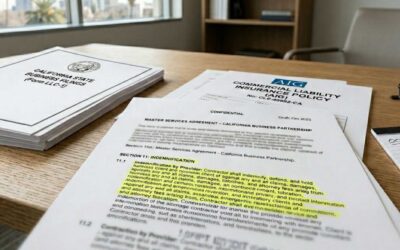
Indemnification Clauses in California Business Contracts
An indemnification clause determines how financial responsibility gets allocated when a contract-related claim surfaces. In California, those provisions carry more legal weight than many businesses realize. Courts scrutinize the wording closely, construction contracts...

Independent Contractor vs. Employee in California: Understanding the ABC Test
Misclassifying a worker in California is expensive. Back wages, penalties, unpaid taxes, and attorney’s fees can quickly add up. Workers on the receiving end lose protections they may be legally entitled to. The ABC test decides who is an employee and who is a...


